Bill Hooks
Just MercyBill Hooks was a young Black man in the Monroe County jail whose testimony helped turn a doubtful accusation into a capital-murder case against Walter McMillian. He said he had seen McMillian’s truck leaving the cleaners near the time Ronda Morrison was killed; investigators later found that Hooks had received money and other assistance from local officials, while an account of his work that morning contradicted his claim. His role illustrates how a witness presented as independent corroboration could become central to a prosecution despite serious questions about his reliability and undisclosed benefits.
Identity and Position
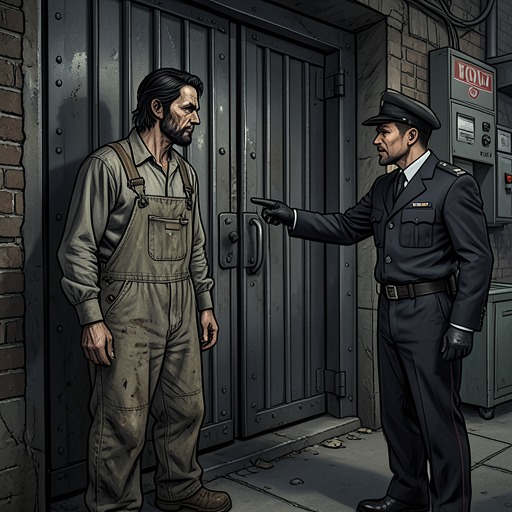
Hooks had been in the county jail for several days on burglary charges when McMillian was arrested. The book describes him as young and as having a reputation as a jailhouse snitch. That description places him in a vulnerable position: he was already in custody, facing charges of his own, when investigators sought someone who could connect McMillian’s truck to the murder.
The prosecution’s case was already relying on Ralph Myers, whose account of McMillian’s involvement was difficult to reconcile with the circumstances. Law enforcement officers knew Myers’s story would be hard to prove. They arrested McMillian for sodomy, a charge that shocked the community and further demonized him, and used the arrest to bring his truck to the jail for Hooks to see. The book presents this sequence as a deliberate effort to obtain a second witness and an identification linking the truck to the crime.
Identification and the Prosecution’s Case
Hooks told investigators that he had driven past Jackson Cleaners near the time of the murder and seen a truck pull away with two men inside. At the jail, he positively identified McMillian’s truck as the vehicle he had seen, nearly six months earlier. His identification gave law enforcement what it needed to charge McMillian with capital murder in Morrison’s shooting death.
At trial, Hooks said he had seen McMillian’s truck pull out of the cleaners around the time Morrison was killed. He described it as a modified low-rider. McMillian immediately told his lawyers that his truck had not been modified that way until several months after the murder, but, in the account of the trial, his attorneys did little with the information. Joe Hightower, another witness, also testified that he had seen the truck at the cleaners. The two identifications appeared to reinforce one another, even though both depended on the disputed presence of a truck with a modification that postdated the crime.
The book recounts a further contradiction: an unnamed former coworker said that he and Hooks had worked together at the NAPA auto parts store on the Saturday Morrison was killed. He remembered the sirens and emergency vehicles racing past around eleven in the morning and said Hooks was working on a car beside him. According to this account, there was only one way out of the store and Hooks had not left during the morning. If Hooks claimed to have driven by the cleaners at the time of the murder, the coworker’s account placed him elsewhere.
The narrator’s assessment of the trial record is that Hooks repeated his account but could not answer questions about what else he had seen or what he was doing in the area. His testimony did not acquire strength through detailed recollection; instead, he kept returning to the claim that he had seen McMillian leave the cleaners with a bag and drive away in the low-rider truck. Yet the prosecution needed his evidence. Together with Myers’s accusation, it helped the State present a case that resulted in McMillian’s conviction.
Benefits and Evidence Withheld
Later investigation found that Hooks had been promised release from jail and reward money if he could connect McMillian’s truck to the Morrison murder. Investigators uncovered county financial records showing that Tom Tate had paid Hooks close to five thousand dollars in reward money and expenses. The records also showed payments for Hooks to travel in and out of the county around the time of trial.
The investigation further established that Hooks was released from jail immediately after giving police his statement about seeing the truck. Court records showed that the district attorney and sheriff had helped get city charges and fines against him dismissed, although they had no authority in city courts. The State was obligated to disclose that charges had been dismissed in exchange for cooperation with authorities, as well as information bearing on the witness’s credibility. McMillian’s lawyers had not received these facts before trial, depriving them of material with which to challenge Hooks’s testimony.
The later findings transformed the significance of Hooks’s identification. What had been offered at trial as confirmation from a second witness was entangled with incentives, favorable treatment, and information withheld from the defense. The issue was not simply that Hooks’s account could be questioned; the prosecution had presented it without disclosing circumstances that could have changed how a jury evaluated both his motives and his credibility.
Narrative Role and Significance
Hooks’s evidence sits within a case shaped by racial power as well as contested testimony. McMillian was a Black man accused of murdering a white woman, and the book describes a Southern history in which officials treated the policing of relationships between Black men and white women as part of their duty. The sodomy arrest, used to shock the community and make McMillian more suspect, shows how an accusation unrelated to proving the murder could help create a climate in which the defendant was demonized before the evidence was tested.
The trial’s racial setting magnifies the stakes of the evidence. Monroe County was forty percent Black, yet the book describes the persistence of practices that kept Black people from serving on juries and notes that the 1986 Batson decision had only recently made discriminatory jury strikes more directly challengeable. In that context, a weak identification did not stand alone: it joined an already suspect account from Myers and entered a system in which the composition of the jury itself was contested.
Hooks is not shown as the architect of the prosecution or as the sole source of the conviction. His importance lies in the function his testimony served and in what the later investigation uncovered about that function. The truck identification helped supply the corroboration officials needed; the undisclosed payments, release, and dismissals exposed how compromised that corroboration was. In McMillian’s case, the difference between an accusation and apparent proof rested in part on a jailed witness whose benefits and whereabouts had not been fully brought before the defense.